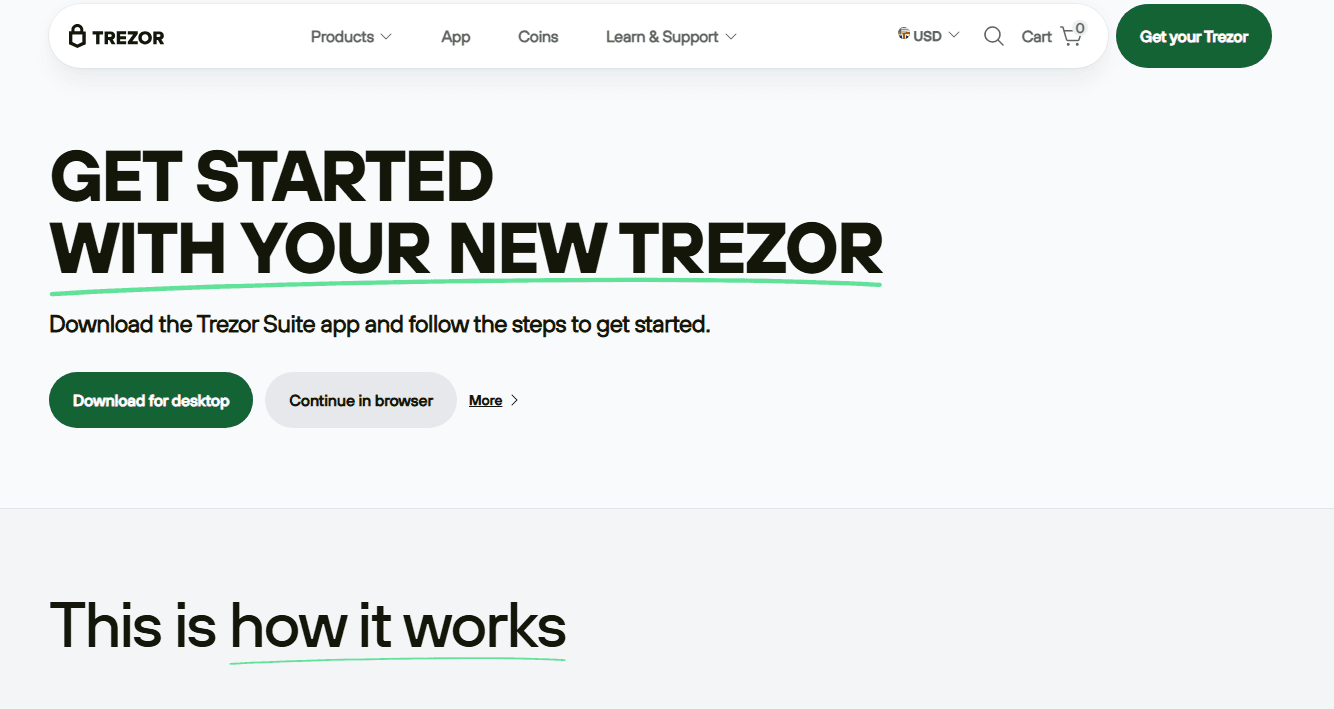
Trezor.io/start: Your Complete Beginner’s Guide to Setting Up a Secure Trezor Hardware Wallet”
As more people enter the world of cryptocurrency, the need for secure, reliable, and user-friendly wallet solutions becomes increasingly important. Trezor, one of the pioneers of hardware wallet technology, offers exceptional offline security for digital assets. For anyone setting up a Trezor wallet for the first time, Trezor.io/start is the official and essential starting point. It guides new users through the entire initialization process—ensuring a safe, seamless, and scam-free experience. Understanding how to use Trezor.io/start properly is the first step to securing your crypto with confidence.
Trezor.io/start is designed as a clear, interactive setup portal that walks you through every stage of preparing your Trezor device. Whether you’re using a Trezor Model One or the advanced Trezor Model T, the website provides device-specific instructions, firmware updates, recovery seed guidance, and security best practices. By directing users to the official setup page, Trezor ensures they avoid the growing number of fake websites and phishing attempts that often target beginners. Everything on Trezor.io/start is verified, secure, and maintained by the Trezor team, making it the safest way to begin.
The setup process begins by selecting your device model. Upon choosing your model, Trezor.io/start guides you to install Trezor Suite, the official desktop and browser-based application for managing crypto. Trezor Suite replaces third-party tools and ensures a secure environment for sending, receiving, and monitoring assets. The page provides official download links for Windows, macOS, and Linux, protecting users from fraudulent applications that may attempt to steal private keys.
Once Trezor Suite is installed, the next step is to connect your Trezor hardware wallet via USB. On the first connection, users are typically prompted to perform a firmware update. Firmware updates are crucial because they include important security enhancements, bug fixes, and compatibility upgrades. Trezor.io/start explains how to safely install firmware without exposing your device to risk. It also emphasizes that your recovery seed should never be entered during updates or on the computer—only on the hardware wallet screen when required.
The most critical part of the setup process—explained in detail on Trezor.io/start—is generating and securing your recovery seed (also called the recovery phrase). This is a set of 12, 18, or 24 words generated by the Trezor device, not by your computer. The recovery seed is the ultimate key to your wallet. If your Trezor is ever lost, damaged, or stolen, you can regain access to your entire crypto portfolio using this phrase on a new device.
Trezor.io/start makes it clear that:
The recovery seed must be written down physically, never stored digitally.
It should remain offline permanently.
Trezor will never ask for your recovery seed—not during setup, not in emails, and not in support chats.
Entering the seed anywhere except the hardware device itself is dangerous and exposes your assets to theft.
These instructions protect users from common scams and emphasize the importance of personal responsibility when dealing with crypto security.
After securing the recovery seed, Trezor.io/start walks users through creating a PIN code, which adds an essential layer of protection. Like all interactions, the PIN is entered directly on the Trezor device or through a secure randomized interface in Trezor Suite to prevent keylogging attacks. This ensures that even if someone gains physical access to your device, they cannot unlock it without the PIN.
With your Trezor initialized, Trezor.io/start then introduces you to the Trezor Suite dashboard. This intuitive interface allows users to add accounts, send and receive cryptocurrencies, check transaction history, adjust fees, manage tokens, and more. Trezor Suite supports multiple blockchains, including Bitcoin, Ethereum, and many other networks. Every transaction requires confirmation on the hardware wallet, guaranteeing that no transfer can occur without your explicit approval.
The setup portal also highlights advanced features available to users. One such feature is the passphrase, commonly referred to as the “25th word.” A passphrase creates a hidden wallet that only appears when the correct phrase is entered. This adds a layer of protection that is extremely difficult for attackers to bypass, even if they possess your device and PIN. Trezor.io/start explains when and why you might use a passphrase, helping both beginners and power users enhance their security.
Beyond basic setup, Trezor.io/start introduces valuable tools and best practices, including:
Labeling and account organization for easier portfolio tracking
Tor integration for enhanced privacy
Coins and token compatibility lists
Safe transaction signing using the hardware device
Security warnings and best-practice tips for long-term protection
These resources make Trezor.io/start more than just a setup page—it becomes a complete knowledge hub for responsible crypto management.
The website also provides troubleshooting guidance and links to official support. If users face connection issues, firmware errors, or questions about recovery phrases, Trezor.io/start directs them to verified help articles—not unreliable third-party forums where misinformation spreads easily.
In a crypto landscape filled with rising security threats, Trezor.io/start plays a critical role in keeping users safe. By offering a secure, transparent, and comprehensive onboarding process, Trezor empowers users to take control of their digital assets with confidence. Whether you are setting up your first crypto wallet or adding an extra layer of protection to your portfolio, Trezor.io/start ensures your journey begins on the right foundation.
In conclusion, Trezor.io/start is the official gateway to setting up a Trezor hardware wallet and learning how to secure cryptocurrency properly. It provides everything needed—from installing Trezor Suite and generating a recovery seed to understanding advanced security features. For anyone serious about protecting their digital assets, following the guidance on Trezor.io/start is the safest and smartest first step toward true crypto self-custody.